
A motorcycle’s engine is a tightly controlled combustion machine. Power is created by explosions inside the cylinder, metal expands under heat, lubricants break down under stress, and temperatures fluctuate constantly as you throttle, cruise, idle, or sit in traffic. The only reason your engine doesn’t melt, seize, or destroy itself is because of the cooling system—a carefully engineered network of components designed to absorb, circulate, and dissipate heat.
But here’s the truth many riders overlook:
Your cooling system is only as strong as the maintenance you give it.
At Precision Powersports Service, we see overheated engines and cooling-system failures more than almost any other major problem. Often, riders believe a simple coolant top-off will fix things, when in reality overheating is a sign of deeper issues: clogged radiators, failing water pumps, weak thermostats, air pockets, deteriorated hoses, corroded coolant passages, or electrical issues that prevent fans from kicking in.This blog breaks down everything you need to know about your motorcycle’s cooling system, why overheating happens, the dangers it presents, and what it takes to maintain it so your engine stays protected—especially in South Florida’s brutal heat and humidity.
Why Motorcycle Engines Overheat: Understanding the Battle Against Heat
Every time the engine fires, temperatures inside the combustion chamber soar above 2,000°F. The cooling system’s job is to keep the engine operating in a narrow, safe temperature range—hot enough for efficiency, but not so hot that metal parts warp or oil breaks down.
Your cooling system is constantly fighting:
Engine-generated heat
High RPM riding, aggressive acceleration, and heavy loads increase internal temperatures.
External heat from the environment
Florida’s climate, slow traffic, and long idle times put enormous strain on cooling efficiency.
Mechanical friction
Moving parts—pistons, bearings, valves—generate significant heat if oil or coolant isn’t circulating properly.
Heat soak after shutdown
After turning off the bike, coolant stops circulating while the engine remains extremely hot, stressing hoses and seals.
Without a maintained cooling system, any one of these factors can tip the balance and create conditions that lead to catastrophic overheating. Riders searching motorcycle overheating repair near me usually discover just how quickly things can spiral.
Core Components of a Motorcycle Cooling System (And How They Fail)
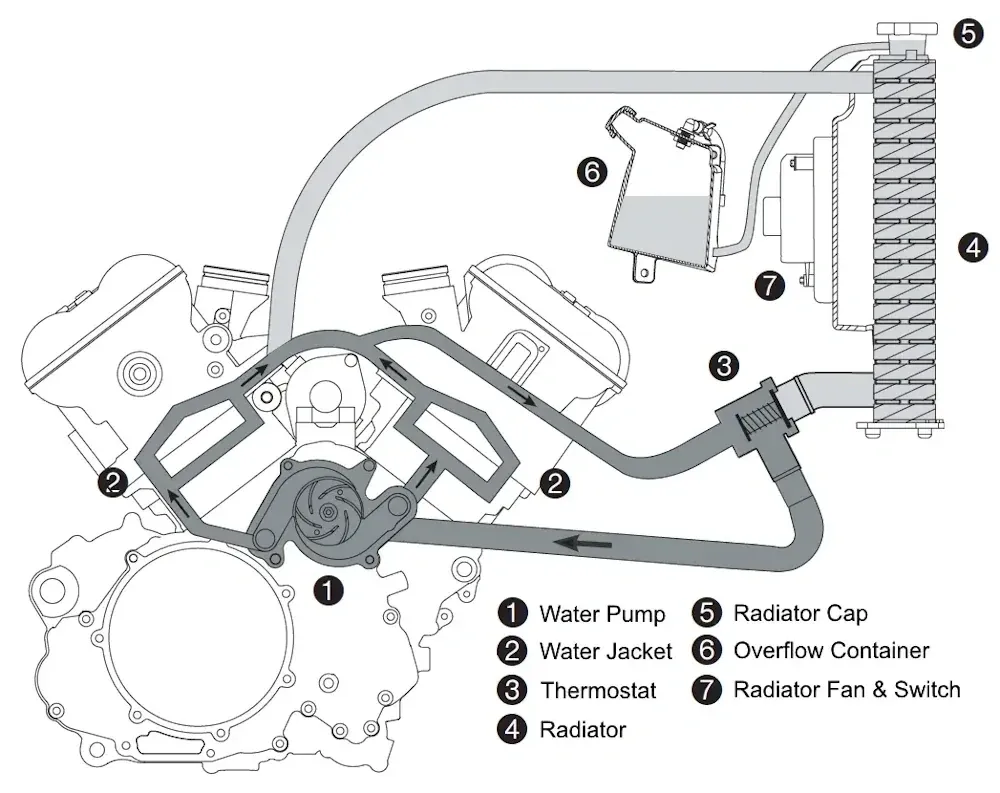
Your cooling system is a network of interdependent components. When one fails, the entire system suffers. Understanding these components helps diagnose issues early.
1. Radiator – The Heat Dissipator
The radiator dissipates heat by passing coolant through thin tubes exposed to airflow. Dirt, bugs, corrosion, or bent fins reduce airflow and cooling efficiency dramatically.
Common issues include:
A weak radiator almost always results in temperature creep—temperature slowly rising during riding or spiking at stoplights.
2. Water Pump – The Heart of Coolant Circulation
If the water pump isn’t circulating coolant, the engine overheats no matter how good the radiator is.
Water pump failures include:
A bad water pump results in rapid, uncontrollable overheating.
3. Thermostat – The Temperature Regulator
The thermostat controls coolant flow based on temperature.
Failures occur when it:
Many overheating issues begin with a thermostat that no longer responds correctly to heat cycles.
4. Cooling Fan & Fan Switch – The Low-Speed Lifeline
At low speeds or in traffic, your engine relies on its cooling fan—not airflow—to stay cool.
Fan problems include:
If your fan doesn’t turn on exactly when it should, your engine is operating in dangerous territory.
5. Coolant Hoses & Clamps – The Weakest Links Under Pressure
Old hoses swell, soften, crack, or burst—especially when exposed to heat cycles and Florida humidity.
Coolant leaks from hoses often appear as:
A ruptured hose can cause near-instant overheating.
6. Coolant – The Lifeblood of the System
Coolant isn’t just water with color. It contains corrosion inhibitors, lubricants, and anti-boil additives.
Issues with neglected coolant include:
Coolant should be changed every 1–2 years—but many bikes go 10+ years with untouched fluid.
Why Overheating Is So Dangerous for Your Motorcycle
Motorcycle engines are precision-built. They don’t tolerate excessive heat the way some older car engines do. When overheating occurs, damage happens quickly.
Here’s what overheating can cause:
Extreme heat causes aluminum heads to warp, leading to compression loss, blown head gaskets, and expensive repairs.
Once compromised, coolant can enter the combustion chamber or oil system, causing catastrophic internal damage.
If temperatures spike too quickly, pistons expand faster than the cylinder, seizing against the walls.
At high temps, oil loses viscosity and fails to lubricate, leading to bearing wear and engine knocking.
Some bikes shut down automatically when temperatures exceed safe limits—leaving you stranded.
Overheated engines often require top-end rebuilds or complete overhauls.
This is why overheating isn’t something you “let cool down and ride again.” Once your engine overheats, it’s calling for a professional evaluation—often leading riders to search motorcycle overheating repair near me or coolant flush Broward.
How Precision Powersports Service Diagnoses Cooling Problems
We treat cooling system diagnostics with the same precision as electrical or engine diagnostics.
Our thorough process includes:
1. Cooling System Pressure Test
We check for leaks, weak hoses, failing caps, or compromised radiators.
2. Thermostat Testing
We remove and heat-test thermostats to verify correct opening temperature and responsiveness.
3. Radiator Flow Test
Clogged radiators are extremely common—especially on older bikes.
4. Coolant Condition Analysis
We inspect coolant for rust, oil contamination, sediment, or breakdown.
5. Fan Activation Test
We heat the system to operating temperature and verify fan operation.
6. Water Pump Inspection
We check for shaft play, impeller wear, seal leakage, and cavitation.
7. Overflow & Recovery System Testing
A faulty overflow system causes coolant loss even when everything else is working.
Every component is evaluated, cleaned, tested, or replaced as needed—ensuring the system works as a unified whole.
Cooling System Maintenance Riders Should Never Skip
Proper cooling system maintenance will extend engine life more than almost anything else
Old coolant destroys internal parts from the inside out.
Dirt, bugs, corrosion, and debris reduce cooling efficiency dramatically.
Most overheating in traffic is caused by fan failures—not coolant.
Old rubber can fail without warning.
Early detection saves thousands in repairs.
A cheap part that controls boiling point—replace it regularly.
Air pockets cause sudden overheating and coolant flow disruption.
These preventive steps are often ignored, but they are the difference between a reliable machine and one waiting to fail.
The Precision Powersports Service Cooling System Difference
Riders throughout Broward County come to us for cooling system service because we go beyond basic checks.
We provide:
Whether you’re dealing with constant overheating, small coolant leaks, a failing fan, or just want preventive maintenance, Precision Powersports Service delivers the expertise your motorcycle needs to stay cool and protected.
When riders search motorcycle overheating repair near me, cooling system flush Broward, or motorcycle repair near me, we’re the shop they trust.
Contact Precision Powersports Service
If your bike is overheating, losing coolant, running hotter than usual, or due for cooling system maintenance, don’t wait—cooling issues only get worse with time.